Blog
Flat Roof Leaks, Heat, and Cost: How Commercial Buildings Decide What Actually Makes Sense
December 22, 2025
For many commercial buildings in Southern California, flat roof problems don’t show up as a single failure.
They show up as patterns:
- leaks that keep coming back
- rising indoor heat
- higher cooling costs
- growing frustration around maintenance and budgeting
The real question usually isn’t “Does the roof have an issue?”
It’s “What’s the smartest next move?”
That answer depends on who you are responsible to.
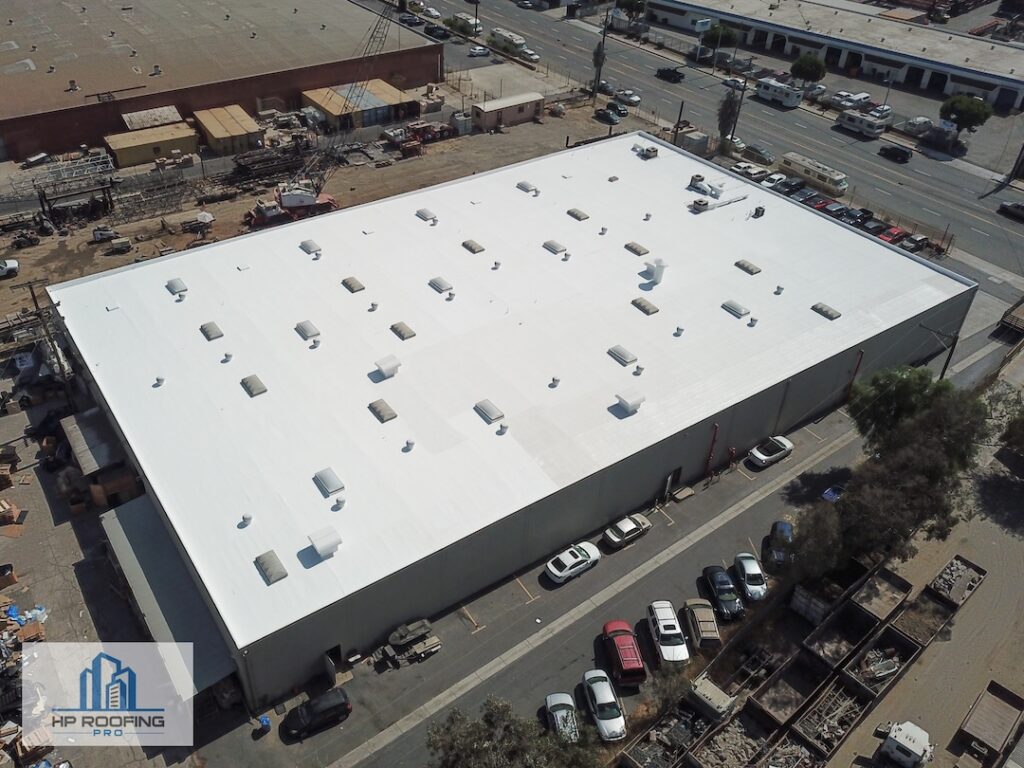
For Property Managers: stopping repeat problems
Most property managers aren’t dealing with catastrophic roof failure.
They’re dealing with:
- tenant leak complaints
- hot top floors
- repeated patch repairs that never fully solve the issue
In many cases, the roof still has structural life, but minor failure points keep reopening—especially around seams, penetrations, and ponding areas.
When that’s the situation, restoration can make sense because it:
- seals recurring leak zones without a tear-off
- reduces roof heat that contributes to membrane fatigue
- minimizes disruption to tenants and operations
The goal isn’t perfection.
It’s stability.
For Facility Managers: planning, not reacting
From a facilities perspective, flat roofs usually fall into a gray zone:
- not new
- not failed
- but increasingly unreliable
Heat plays a bigger role than most people realize.
As membranes absorb and release heat day after day, expansion and contraction accelerate wear — especially at seams and flashing details.
When the structure is still sound, restoration is often used to:
- create a seamless waterproof layer
- reduce rooftop temperature
- slow deterioration
- document roof condition for planning
This approach supports a maintenance strategy, not an emergency response.
For Owners and Asset Managers: capital timing matters
Owners usually enter the conversation at a different point.
The question isn’t just “What’s wrong with the roof?”
It’s “Do we really need to replace it now?”
Replacement is necessary when:
- insulation is saturated
- the deck is compromised
- structural integrity is in question
But when the roof is weathered — not failed — restoration can:
- extend usable roof life
- defer a major capital expense
- reduce heat-related operating costs
- preserve optionality
That flexibility matters, especially when capital planning spans multiple years.
Why heat and leaks are connected
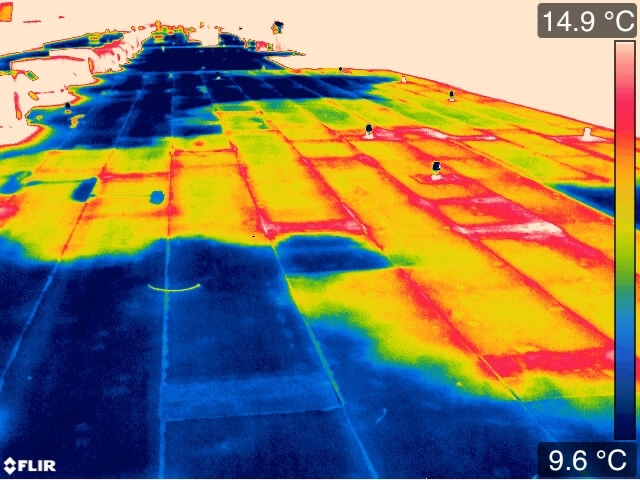
In hot California climates, flat roofs absorb heat for hours.
Over time, that leads to:
- membrane fatigue
- stressed seams and penetrations
- higher interior temperatures
- increased HVAC load
Heat doesn’t just affect comfort.
It accelerates the conditions that cause leaks.
Reflective restorative systems address both at once.
Restoration vs. replacement: the practical distinction
Replacement is about starting over.
Restoration is about extending what still works.
The mistake many buildings make is skipping the evaluation step and jumping straight to the most disruptive option.
A measured decision looks at:
- structural condition
- leak patterns
- heat exposure
- remaining service life
- budget timing
Not every roof qualifies.
And that matters.
Our approach
At HP Roofing Pro, the first question we ask is simple:
Is the roof still structurally sound — and if so, what’s the smartest way to extend its performance?
Sometimes the answer is replacement.
Sometimes it’s restoration.
The point isn’t to push a system.
It’s to make the decision before urgency makes it for you.