Blog
How to Effectively Remove Ponding Water from a Flat Roof: A Comprehensive Guide
August 9, 2024
Flat roofs are popular for commercial buildings, particularly in areas like California, where the climate is generally dry. However, ponding water can still become a significant problem for flat roof systems, even in regions with less rainfall. Water that doesn’t drain properly can lead to severe issues, including leaks, structural damage, and mold growth. If you’re facing the challenge of ponding water on your commercial roof, here’s a step-by-step guide to help you address the issue.
Important Notice: Leave This to the Pros
While the following guide provides an overview of the steps involved in removing ponding water from a flat roof, it’s essential to understand that this is not a DIY project for beginners. The process involves significant structural modifications, including cutting channels, adjusting roof rafters, and working with roofing membranes and insulation. Improper execution can lead to more damage, void warranties, and even compromise the safety of the building.
For these reasons, hiring a professional commercial roofing contractor, like HP Roofing PRO, with the experience, tools, and expertise to handle such complex tasks safely and effectively is crucial.
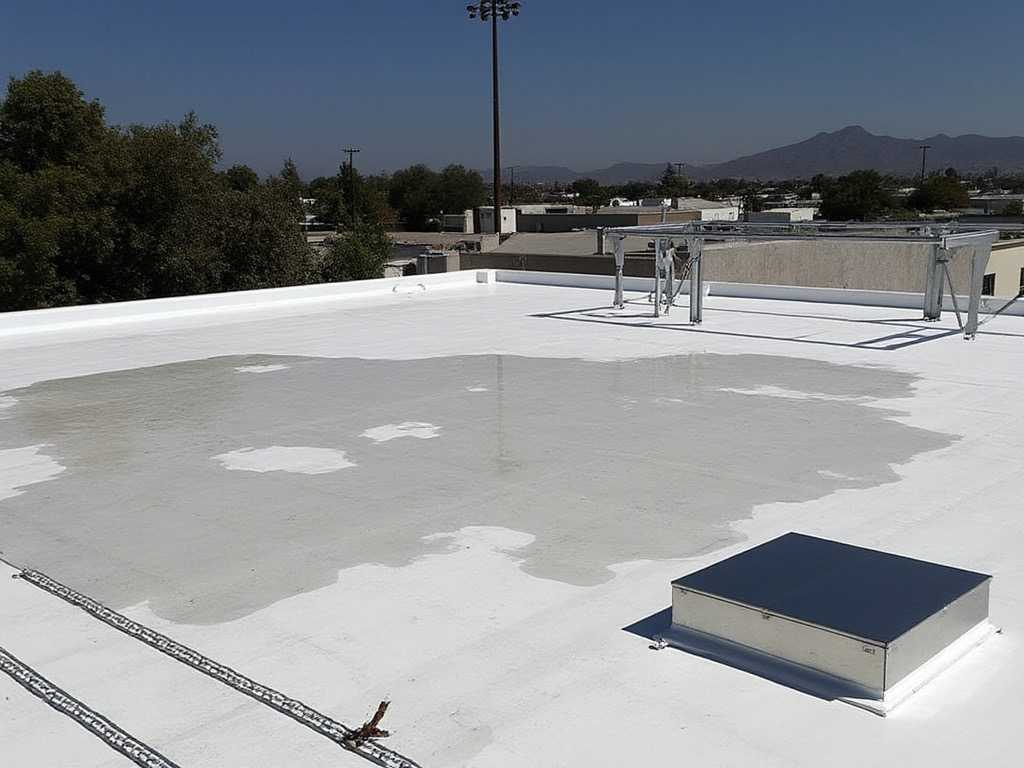
ponding water on roof
1. Understanding the Problem: Why Ponding Water is Dangerous
Ponding water, often called “ponding water,” remains on your roof more than 48 hours after rainfall. This can happen due to poor drainage, an improperly pitched roof, or blocked drains. Over time, this can weaken the roofing materials, leading to leaks and damage to the building’s interior. The weight of the water can also strain the roof’s structural integrity, potentially leading to costly repairs or even roof failure.
2. Initial Steps: Removing Existing Water
Removing the ponding water is crucial before making any structural changes to your roof. This can be done using a pump or manually with buckets if the area is small enough. Once the water is removed, you’ll need to identify the deepest part of the roof, as this will guide where you should cut channels to improve drainage.
3. Creating Drainage Channels: A Focused Approach
The most effective way to remove ponding water is by creating drainage channels. Start by cutting a single channel and assess its effectiveness before adding more. Here’s how to do it:
- Identify the Drainage Path: Determine the best path for flowing water off the roof. This path should lead to the roof’s edge or a drainage system.
- Cutting the Channel: Carefully cut back the roofing material, insulation, and cover board to create a channel. The depth and width of the channel should be sufficient to allow water to flow freely.
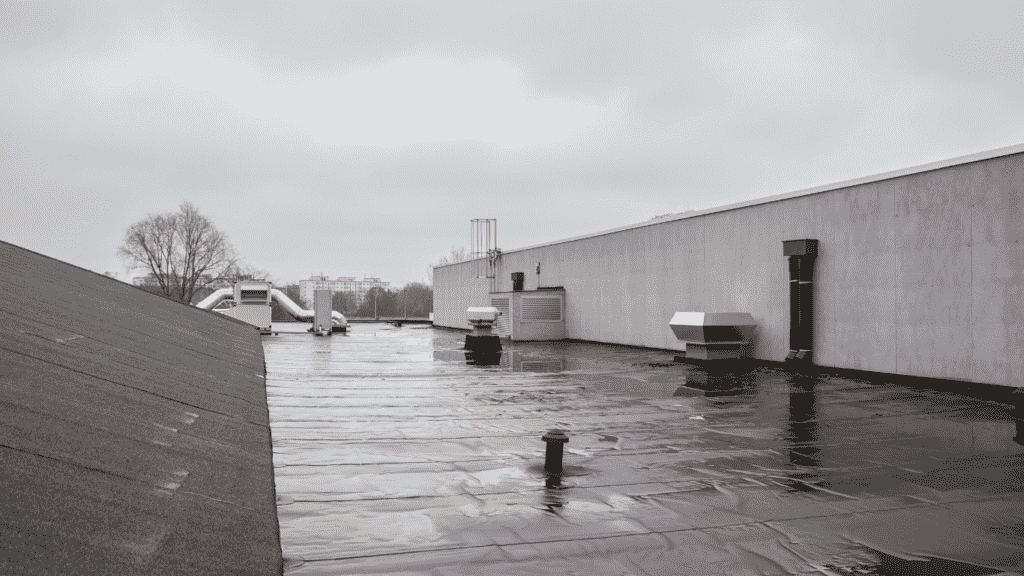
rain on a flat roof
4. Structural Adjustments: Modifying the Roof
Sometimes, the roof’s structure may need to be adjusted to facilitate proper drainage:
- Cutting Roof Rafters: You may need to cut back the roof rafters. This will allow you to create a slight pitch in the roof, directing water towards the channel.
- Replacing Plywood: After modifying the rafters, replace the plywood to match the existing roof structure. Ensure the new plywood is securely fastened and aligns with the roof’s pitch.
- Insulating with Rockwool: Fully insulate the area using Rockwool. This helps with energy efficiency and ensures the roof remains structurally sound.
- Layering with Plywood: Add two layers of plywood over the insulation, matching the roof’s existing structure. This provides additional strength and stability.
- Applying Acrylic Coating: To further protect the roof and prevent future leaks, apply an acrylic coating over the modified area. Acrylic is a durable barrier, isolating potential leak points and ensuring long-term waterproofing. This coating also enhances the roof’s resistance to weathering and UV radiation.
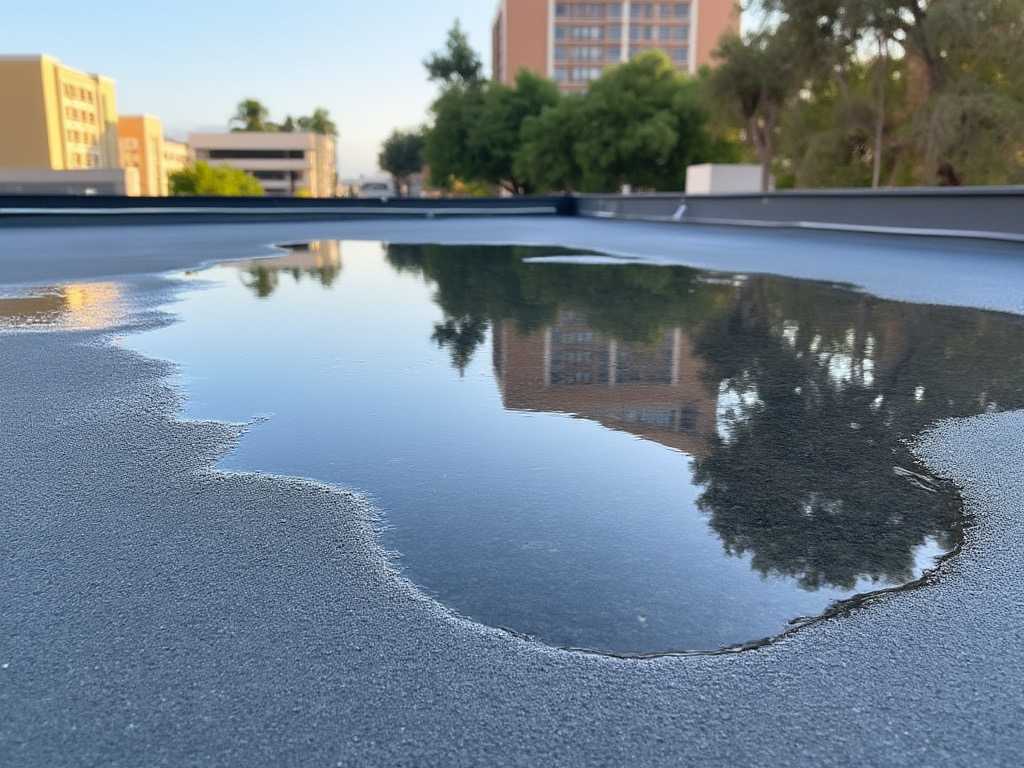
ponding water
5. Reapplying the Membrane: Sealing the Roof
Once the channel is cut and the structural modifications are complete, reapply the roofing membrane:
- Membrane Application: Tightly lay the membrane back over the newly cut channel. This step is crucial to ensuring the roof remains watertight.
- Welding Patches: Use heat welding techniques to secure patches over the cuts. This adds an extra layer of protection against leaks.
6. The Final Result: Enhanced Drainage
The lowered section of the roof created by the channel will now act as a scupper, allowing water to flow off the roof. While it may not pass through a parapet wall, this method significantly reduces the risk of ponding water and prolongs the lifespan of your commercial roof.
Conclusion: Hire a Professional for Best Results
Removing ponding water from a flat roof requires professional knowledge and skill. Attempting to handle these tasks without the proper experience can result in further damage, safety risks, and potentially higher repair costs down the line.
HP Roofing PRO has extensive experience in commercial roofing and can provide expert solutions tailored to your specific needs. Contact us today to ensure your roof is properly maintained and free of ponding water, preserving the integrity and safety of your building.